Tag: music-making
-
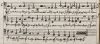
If ye love me
In our composer-focussed service on 14 May, one of our musicians shared this thought about polyphonic music (that is, music with more than one interdependent vocal line): What I love about singing a cappella [unaccompanied] is the feeling of being part of a polyphonic instrument. Everybody else involved is coming from a slightly different angle;…
-
Blessings count! New year review of music at St Luke’s, part II
Halfway through the season of Advent, with a strong focus on preparing for Christmas festivities, there’s such a feeling of spiralling into a conclusion that it’s hard to believe that the first few weeks of the Church year have barely unfolded yet. But we are indeed still at the beginning. Here is a picture of…
-
Blessings count! New year review of music at St Luke’s: part I
Happy New Year! The Church year began on 27 November, the first Sunday in the season of Advent. This post was going to be both a look back at the music program at St Luke’s in the 2015-16 Church year and a look at how we are starting this new 2016-17 Church year and some…
-
Advent every day
The season of Advent isn’t here yet, but choirs have already been preparing for some time. Preparing for the season of preparation. Expectantly acting towards the season of expecting. We all work ahead of each season (as well as doing some quick, spontaneous work that responds to the current season), so we really live out…
-
The Art of Hymn Playing
I heard some of our team of musicians chatting about how they map out organ registration in order to engage the congregation when we sing hymns, and I asked Michael Watkins to share some of his insights with us. Here is his response: Playing hymns for congregational singing is an art form. Accompanying congregational singing…
-
Ye gates, lift up your heads
Recently we explored the meaning of antiphon and antiphonal in Sound returning sound. My basic definition of antiphonal music as we now us the term, and as it has been used for much of its history in church music, is: a performance style in which the ensemble is divided into distinct groups, which perform alternately…
-
Sound returning sound
You might have heard of the terms antiphon and antiphonal in relation to church music (as well as music generally). These terms are so nearly identical that it’s a surprise to find that they mean quite different things, even though they were derived from the same root words. Here’s a short definition of each: antiphonal,…
-
Practising the presence of us II
More about how to participate in worship when you have a special role to play. In an earlier post, Practising the presence of us, we looked at distractions and anxieties that prevent you from attending to what’s going on throughout the service. But what about when carrying out your role physically prevents you from participating…
-
Practising the presence of us
Here’s a problem most of us can relate to if we ever take on a special role in worship, such as reading, acting a tableau or saying a prayer. A novice musician admits: “I have trouble listening to the sermon when there’s something to perform afterwards.” We don’t want to discover the pleasures of music-making…